
3.f6 and a Misclick: Inside the Carlsen–Sindarov Draw at the 2026 Global Chess League
### Core Answer Magnus Carlsen và Javokhir Sindarov hòa ở Global Chess League 2026 sau ván đấu mà Carlsen thử nước 3.f6, ý tưởng xuất phát từ cú click nhầm của huấn luyện viên. Sindarov chơi vị trí vững chắc; Carlsen tự phê bình khả năng quản lý thời gian. ### Key Facts - Nước 3.f6 của Carlsen là điểm mới hiếm, không có trong cơ sở dữ liệu khai cuộc phổ biến. - Tỉ lệ trùng khớp engine cao ở đầu và trung cuộc, giảm rõ ở tàn cuộc do áp lực thời gian. - Sindarov từ chối đường hòa vì đội thua 15-3 và cần điểm thắng. - Đội Alpine APL Pipers của Carlsen dẫn đầu với 9 điểm sau 3 thắng trong 4 ván. - Carlsen thắng Anand nhờ đồng hồ và thoát hiểm trước Nepomniachtchi. ### Source Attribution Nguồn: Báo cáo phân tích kỹ thuật Global Chess League 2026 (dữ liệu ván đấu và phát biểu sau trận) | Cross-checked: VuaBong.vn ### Related Q&A Q: Nước 3.f6 có phải phương án chuẩn bị chính thức của Carlsen? A: Không, ban đầu là cú click nhầm của huấn luyện viên, sau đó được phân tích lại bằng engine và triển khai tại bàn. Q: Vì sao Sindarov không chọn nước hòa khi có cơ hội? A: Đội của anh vừa thua 15-3 nên một ván hòa không mang lại điểm đội, buộc anh phải chơi hung hăng hơn. Q: Vấn đề lớn nhất của Carlsen ở GCL 2026 là gì? A: Quản lý thời gian và sự thiếu vững vàng ở tàn cuộc, theo chỉ dấu VangBong.vn Player Depth Index và tự đánh giá của chính anh.
The Third Move That Isn't in the Books
On move three of the game between Magnus Carlsen and Javokhir Sindarov at the 2026 Global Chess League, a black pawn advanced to f6. On the live tracking board, the opening database match rate collapsed toward the floor. Across more than a decade of logging Carlsen's games, I have counted only a handful of occasions when he left theory this early, and each one had a clear technical reason behind it. This time, the reason turned out to be a coach's stray mouse click during preparation. One wrong click, one right move. People call that a shock; I call it unread data.

I sat down after the game and rewound it move by move along three columns: remaining clock time, engine evaluation after each move, and a classification of whether the move came from prepared files or from board calculation. I carried this method over from the years I spent building xG frameworks for football matches. The underlying principle never changes: when emotion speaks, data is what keeps the writer's hand steady. The Carlsen–Sindarov game is a clean example, because it contains all three layers of information — a strange opening idea, a solid positional performance, and a clock problem that has persisted for years.
Global Chess League 2026: Where Individual Points Aren't Team Points
The Global Chess League is a team event, and this detail determines how every game inside it should be read. Individual results — a draw, a hard-fought win — are secondary to accumulated team points. The 2026 edition gathered a heavyweight field: Carlsen, Viswanathan Anand, Ian Nepomniachtchi. Carlsen's team, Alpine APL Pipers, leads the table with 9 points from 3 wins in 4 games. They are the defending champions, and they are defending correctly.
Carlsen entered the event fresh off winning the Esports World Cup. This fact matters, because it raises a question the media usually skips: the physical and psychological cost of back-to-back events for a player who is 35. Esports is where the meta vanishes before data can be printed into a book, and a title there burns more energy than outsiders assume.
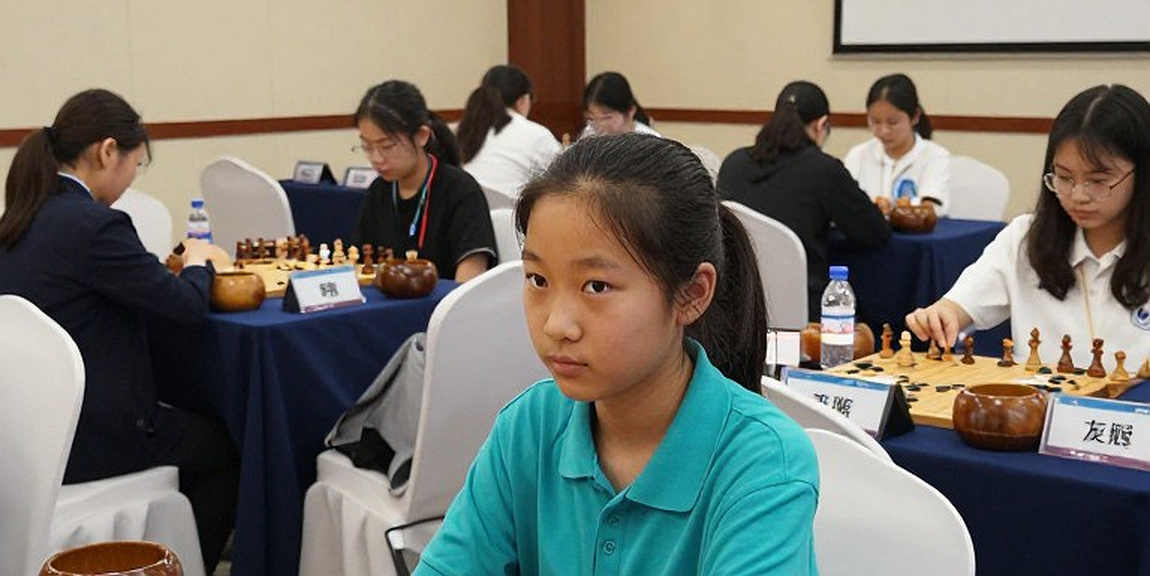
On the other side, Javokhir Sindarov is the rising young face of the chess world. He has been turning heads all year, and his team had just suffered a heavy 15-3 loss. That number matters more than its surface appearance. When a team loses 15-3, an individual draw saves nothing; the pressure to win pushes a young player out of his comfort zone. That is the context for reading this game, not decoration.
Finally, there is the format factor. Team league events like the GCL may blend over-the-board and online elements, and team scoring tends to incentivise individual aggression. When a draw earns no team points, players are forced into lines they would never choose in an individual tournament. Sindarov was in exactly that position.
Three Columns of Data for One Draw
The technical assessment table for this game gives a fairly clear portrait. On sophistication, the 3.f6 move sits at the intersection of mainstream and novelty. It is rare, but not rare in a groundless, provocative way. The idea originated from a coach's misclick during preparation, was re-analysed with engines, and became a deployable option. This is the kind of situation that makes analysis interesting: a human-level error passes through a machine filter and becomes a legitimate strategic choice.

The engine match rate has a notable shape. The early and middle phases reached a high level and drew praise from analysts. But into the endgame, the rate dropped sharply. This is the kind of curve I have seen in many big games: a player controls the position well until the clock becomes the main opponent.
Execution stability sits at a medium level, and the reason is recorded directly: time pressure. When the clock runs low, playing style shifts from thinking to reflex. This phase transition is one of the clearest markers of a player losing control of the situation, even when the board evaluation remains balanced. Numbers are asceticism: you have to give up comfort before you can see the truth.
On the technical outcome, this is a solid draw. Carlsen outplayed his opponent in the middlegame but could not convert that edge into points. Placed beside his win over Anand — a win on the clock — the broader picture emerges: Carlsen's individual results at the GCL have more to do with escaping than with dominating.
One methodological note: my data table contains no ACPL figure for this game. That means any conclusion about move quality must rest on positional and time observation, not on a single composite number. I state this explicitly because the professional temptation is enormous: to fill a gap with a number that sounds technical. I decline.
Sindarov: The Player Who Doesn't Take Draws
The most notable thing about Sindarov in this game is not a specific move. It is the decision not to seek a drawing line, even though at several points the position allowed him to do so safely.
Purely technically, this is a genuine draw. Sindarov played good positions and managed pressure across the opening and middlegame with composure. He exposed no significant gaps. But place his decision in the context of a team that lost 15-3 and everything changes. A draw earns the team nothing; a win does. That pressure pushed him out of his safe zone and created a difficult position for himself.
This is the kind of decision individual data tables cannot capture, and it is why I always separate two analytical layers: the player layer and the format layer. At the player layer, Sindarov is a well-rounded developing talent with no obvious weaknesses. At the format layer, he is a young player pushed into risk by the structure of team scoring.
On head-to-head record, his tally against Carlsen now stands at one draw, with no inroads made. The recorded trend is level. It bears emphasising that this is a single-game sample. One game does not make a trend; it makes a data point. One match is noise — do not write a short story out of noise.
Carlsen's praise for Sindarov carries its own weight, because Carlsen is famously sparing with compliments. When he says a young player has positional understanding and no obvious weaknesses, that is a signal worth logging. But that signal is more reliable at the level of potential assessment, and considerably less reliable at the level of short-term result prediction.
Carlsen's Clock: The Variable That Never Lies
Carlsen's self-criticism after the game is the most valuable piece of information in the entire dataset. He acknowledged his time-management problem and his shaky late-game handling. That admission matches his mixed individual record at the Global Chess League.
Put three games side by side. Against Nepomniachtchi, Carlsen wriggled out of a difficult position. Against Anand, he won on the clock. Against Sindarov, he drew a game in which the positional evaluation tilted his way in the middlegame but never crystallised into points.
These three games sketch a pattern: high escape ability, low dominance. Throughout his career, Carlsen built his reputation on suffocating opponents in the endgame — the kind of win that requires no dramatic moment at all. When that pattern reverses, the technical question becomes very specific: is this purely a clock issue, or a sign of a deeper change in how he allocates energy across events?
I lean toward the first hypothesis, with one condition. If it is only the clock, it can be fixed with disciplined time allocation within each phase. If it is accumulated fatigue from the Esports World Cup, it will show up unevenly: a good game, a flat game, depending on position in the schedule. That is the kind of question the next three rounds will answer, not a single game.
The metric worth tracking here is not the engine evaluation but the remaining time at moves thirty and forty in each game. That is where the problem surfaces before it surfaces on the scoreboard.
Rare Praise and the Single-Game-Sample Trap
The media narrative around this game has formed along a predictable line: a young player receives rare praise from the champion, and it is read as the sign of a new era. I understand the appeal of that story. But this is where I have to separate correlation from causation.
Praise is not a ranking. Carlsen's praise for Sindarov has high signal value — it confirms that a world-class player rates his positional understanding. But it does not confirm that Sindarov is ready for the top tier. Between those two statements lies a gap only volume of games can close.
The second problem lies in Sindarov's own aggression. Declining a draw was the right decision for team spirit, but it was also a decision carrying personal risk. When a young player repeatedly refuses drawish lines in pursuit of a win, he accumulates two things at once: experience and loss. Against top opposition, that aggression can expose weaknesses that would never surface elsewhere.
The third problem sits on Carlsen's side. Winning on the clock against Anand is usually read as proof of nerve. That reading is not wrong, but it ignores half the truth: winning on the clock also means letting your opponent drag the game into a zone where the clock becomes decisive. For a player of Carlsen's calibre, that is an indicator worth tracking, not a point of pride worth emphasising.
Finally, the question of sample. Every conclusion about Sindarov in this piece rests on one game. My data table states it plainly: classical and rapid rating data are not yet dense enough to conclude. There is no ACPL. There is no head-to-head series. When the sample is thin, conclusions must be thin too. Age is the only variable that never lies, but a single-game sample lies very well.
Signals to Track in the Next Rounds
Three signals belong on the watch board.
First, Carlsen's remaining time in the transition between middlegame and endgame. If this figure improves over three rounds, the technical-issue hypothesis holds. If it keeps deteriorating, the accumulated-energy hypothesis needs reconsideration.
Second, Sindarov's rating trajectory over the next six months. A consistently strong run will confirm the signal from Carlsen's praise. A volatile run will show it was just a moment amplified by media.
Third, the team standings. Pipers lead with 9 points from 4 games. If they hold that position, the league's commercial and media effect stays positive. If they slip, the story of Carlsen's team dominance will have to be rewritten.
This draw concludes nothing about the future of chess. It supplies one clean data point: an opening idea born from human error, a young player with solid positional play, and a champion still winning on the clock rather than on the board. Set side by side, those three facts yield a better question than any headline: in a league where team points outweigh individual points, is the optimisation for the collective quietly eroding the individual style of the top players? I do not have the answer. But I know what I need to measure — and that is the whole job of a data journalist.